As an Amazon Associate, we receive a commission on every qualifying purchase. We’re so glad you’re reading and supporting us! We only recommend products that are honest and have been tried and tested by us.
Introduction to the Consoles Wars
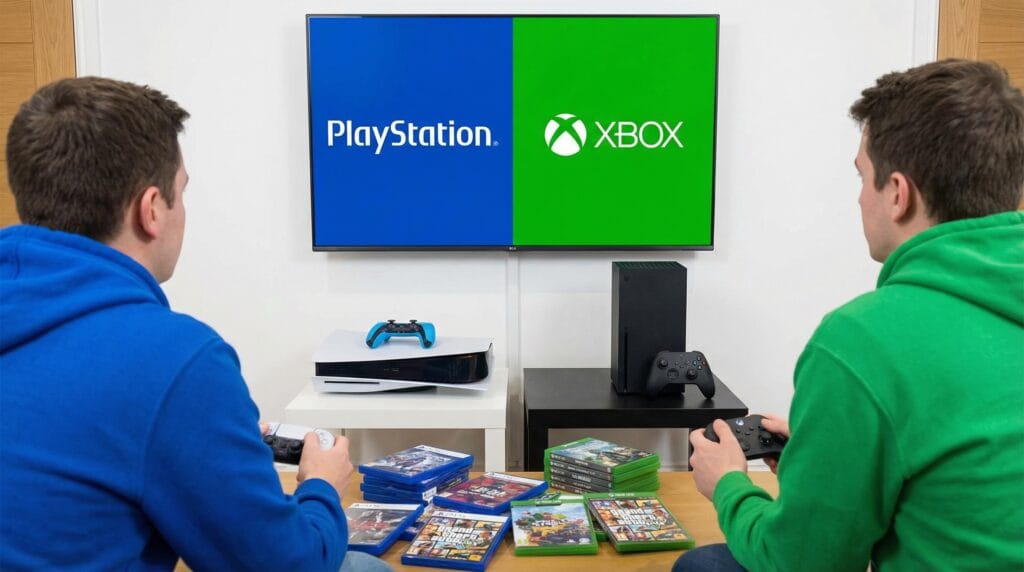
The rivalry between PlayStation and Xbox has been a prominent feature of the gaming landscape for over two decades. This ongoing competition has significantly influenced the gaming industry, shaping not only the consoles themselves but also the gaming experiences available to players. The PlayStation brand, launched by Sony in 1994, quickly established itself as a formidable competitor by focusing on compelling exclusive titles and immersive gaming experiences. In contrast, Microsoft’s Xbox, introduced in 2001, carved its niche by promoting online multiplayer gaming and backward compatibility.
Over the years, each console has developed a unique identity that appeals to different segments of the gaming community. PlayStation’s emphasis on single-player narratives, high-quality graphics, and exclusive franchises such as “The Last of Us” and “God of War” has attracted a substantial following. These titles have not only captivated players but also set industry standards for storytelling and game design. On the other hand, Xbox has prided itself on providing a robust online multiplayer environment through Xbox Live, along with innovative features like Game Pass, which grants subscribers access to a vast library of games.

- Enhanced visuals: Completely rebuilt from the ground up using Naughty Dog’s latest PS5 engine technology to improve ever…
- Fast loading: Initial loading times are near instant, and seamless after the first instance thanks to the PS5 console’s …
- Haptic feedback: DualSense wireless controller haptic feedback support for every weapon elevates combat encounters, and …
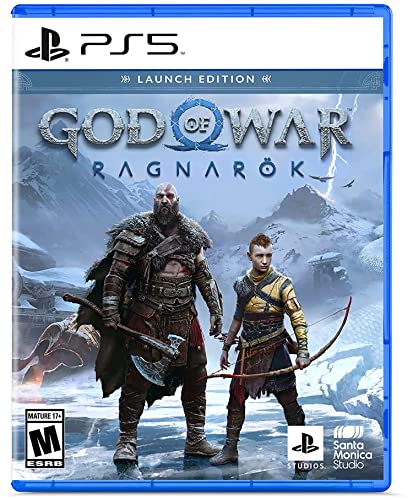
- Launch Edition includes in-game downloadable content Kratos Risen Snow Armor & Atreus Risen Snow Tunic (Cosmetic)
- Feel your journey through the Norse realms, made possible by immersive haptic feedback and adaptive trigger functionalit…
- Take advantage of multidirectional 3D Audio; hear enemies approaching from any direction. (3D audio with stereo headphon…
As the console wars have evolved, so too have the strategies employed by Sony and Microsoft. The introduction of new technologies, such as virtual reality and cross-platform gaming, has further complicated the competitive landscape. Gamers today must navigate a plethora of choices, each offering distinct advantages. This blog post aims to explore the strengths and weaknesses of both PlayStation and Xbox, providing insight into why certain gamers may prefer one platform over the other. By examining factors such as game libraries, hardware specifications, and user experience, we hope to shed light on this enduring rivalry in the gaming world.
Consoles Hardware Specifications and Performance
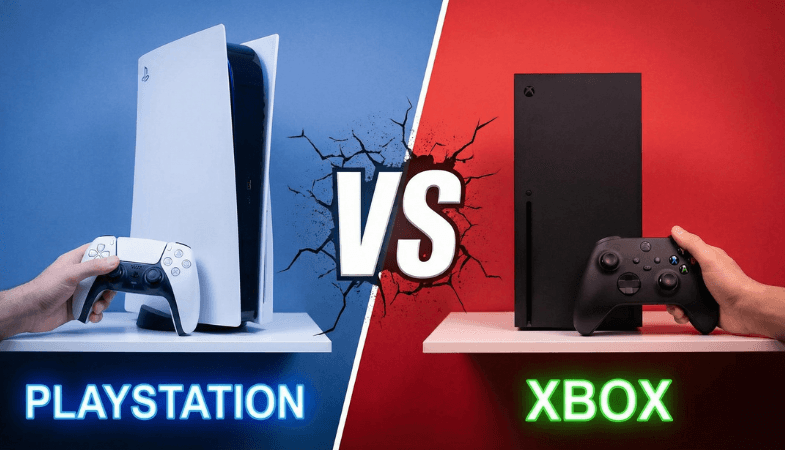
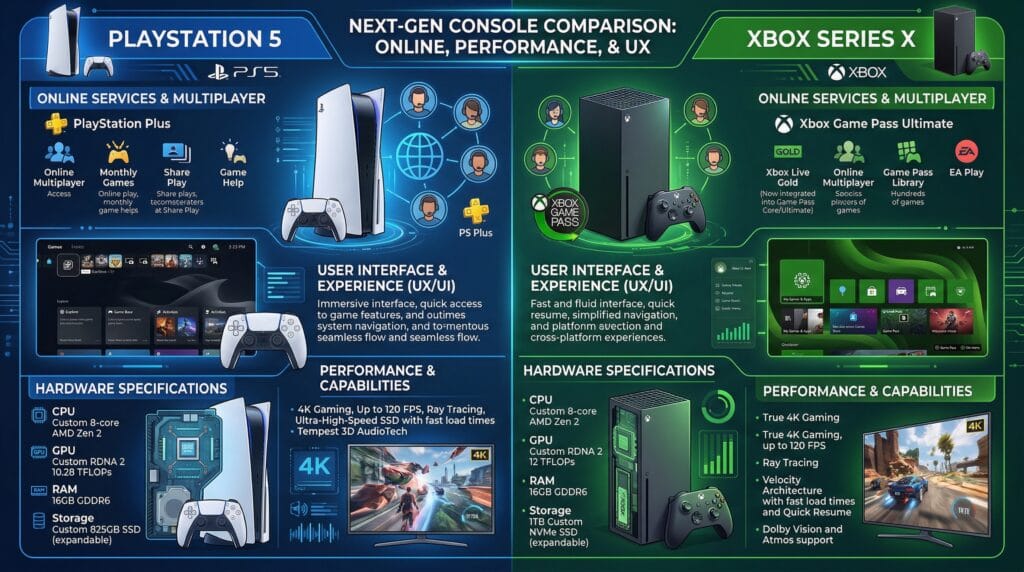
The hardware specifications of gaming consoles significantly influence their performance, defining the gaming experience through aspects such as processing power, graphics capabilities, and memory. In the current generation, both PlayStation and Xbox feature cutting-edge technology that enhances gameplay. The PlayStation 5 is powered by a custom AMD Zen 2 processor with eight cores, clocked at 3.5 GHz, complemented by an RDNA 2-based GPU delivering hardware-accelerated ray tracing. This combination facilitates high-quality graphics and excellent physics simulation, vastly improving visual fidelity.
Contrastingly, the Xbox Series X boasts a similar AMD Zen 2 processor, also with eight cores running at 3.8 GHz, and features a powerful RDNA 2 GPU. This configuration allows the Xbox to achieve higher performance benchmarks, particularly in terms of frame rates and resolution. Notably, both consoles include SSDs to drastically reduce loading times, yet the Xbox Series X’s 1TB SSD is slightly more efficient due to its velocity architecture, enabling quicker load times and better data management.
When examining graphics capabilities, both systems support 4K gaming at high frame rates, with the PlayStation 5 achieving up to 120 fps in select titles. The Xbox Series X, however, can dynamically scale resolution and deliver consistent performance in demanding games, ensuring a smoother experience during intense action sequences. Memory is another critical aspect; the PS5 has 16GB of GDDR6 RAM, while the Xbox Series X also offers 16GB, but with different bandwidth configurations that affect how games utilize memory for textures and assets.
In essence, while both consoles deliver impressive specifications, the minor variances can lead to distinct performance impacts, making them suitable for different gaming preferences and expectations.
3. Exclusive Consoles Games: A Driving Factor
Exclusive games play a pivotal role in shaping gamers preferences when choosing between consoles, particularly between PlayStation and Xbox. Each platform boasts a unique library of exclusive titles that not only highlight the strengths of their respective hardware but also cater to varied gaming interests. PlayStation has established a robust lineup of critically acclaimed exclusives such as God of War, The Last of Us, and Spider-Man. These games not only showcase stunning graphics and innovative gameplay but also offer compelling narratives, contributing to a rich gaming experience that many players find hard to resist.
On the other hand, Xbox has also made significant strides in developing exclusive content. Titles like Halo Infinite, Gears 5, and Forza Horizon 5 emphasize Xbox’s commitment to delivering unforgettable gaming experiences that cater to first-person shooter and racing genre enthusiasts. The community-driven features of these games often create a sense of belonging among players, further enhancing their appeal.

- Bonus Content: Order Halo Infinite and receive the exclusive VK78 Commando Rifle Skin only while supplies last. Codes wi…
- The legendary Halo series returns with a groundbreaking multiplayer experience and the most expansive Master Chief campa…
- Campaign: When all hope is lost and humanity’s fate hangs in the balance, the Master Chief is ready to confront the most…
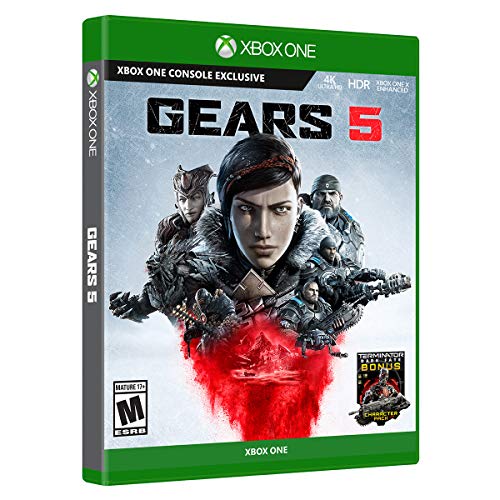
- From one of the most acclaimed game franchises in history, Gears 5 delivers an epic campaign and brutal action across fi…
- Campaign: With all out war descending, Kait Diaz breaks away to uncover her connection to the enemy and discovers the tr…
- Escape: A new, aggressive, high stakes co op mode featuring a three player suicide squad that must work together to take…

- Lead breathtaking expeditions across the vibrant and ever-evolving open world landscapes of Mexico with limitless, fun d…
- Explore a world of striking contrast and beauty. Discover living deserts, lush jungles, historic cities, hidden ruins, p…
- Immerse yourself in a deep campaign with hundreds of challenges that reward you for engaging in the activities you love….
The presence of exclusive games can significantly influence a gamers decision, often resulting in brand loyalty. Gamers who prioritize single-player narratives may find themselves drawn to PlayStation due to its extensive catalog of story-driven exclusives. Conversely, those who prefer multiplayer and community-focused gameplay might lean towards Xbox because of its gaming ecosystem, which includes Xbox Live and Game Pass, enhancing the overall gaming experience.
In essence, the availability and quality of exclusive games are critical factors that influence console choice. As gamers weigh their options, the distinctive offerings from PlayStation and Xbox continue to play a paramount role in shaping the competitive landscape of the gaming industry.
Consoles User Interface and Experience
The user interface (UI) and overall user experience (UX) play a critical role in a consoles appeal, influencing gamers’ interaction with their devices. Both PlayStation and Xbox have dedicated substantial resources to creating intuitive and engaging interfaces that cater to their respective audiences. As such, understanding the nuances between them can help potential buyers make informed decisions.
PlayStation’s UI stands out with its clean and minimalist design, prioritizing a seamless experience. The recent iterations have focused on simplifying navigation, allowing users to access games, applications, and settings with minimal effort. The Control Center, for example, acts as a hub enabling quick access to essential functions without leaving the game. This design philosophy enhances the overall user satisfaction, and the emphasis on speed allows players to switch effortlessly between tasks, resulting in a fluid gaming experience.
In contrast, Xbox has adopted a more dynamic approach to its UI, often described as adaptable and customizable. The Xbox dashboard is designed to provide users with a plethora of information and options at a glance. Gamers can personalize their home screens, arrange favorite games, and access various features with ease. The inclusion of features such as Game Pass, which consolidates services and suggestions in one place, enhances efficiency. Furthermore, Xbox’s voice command features improve accessibility, catering to a wider range of gamers, including those with disabilities.
Accessibility is an area where both consoles have made strides. PlayStation includes several options, such as screen readers and customizable button configurations, ensuring that its platform is enjoyable for everyone. Xbox has similarly expanded on accessibility tools, offering settings that allow users to adjust display preferences and remap controls, facilitating an inclusive experience.
In conclusion, when comparing the user interface and experience of PlayStation and Xbox, both platforms exhibit their own strengths. PlayStation’s streamlined approach offers simplicity, while Xbox embraces versatility and customization, ensuring that users can tailor their experiences according to personal preferences. Ultimately, the choice may come down to individual preferences and which interface resonates more with the user’s gaming style.
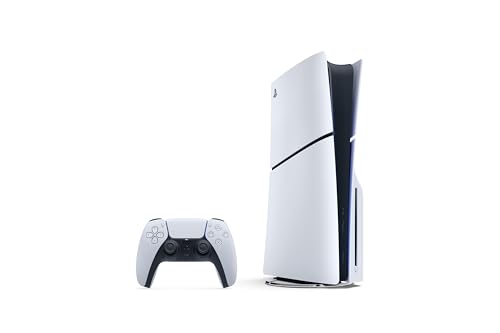
- PlayStation 5 Console – 1TB, includes wireless controller, 1TBSSD, Disc Drive, 2 Horizontal Stand Feet, HDMI cable, AC p…
- 1TB of Storage, keep your favorite games ready and waiting for you to jump in and play
- Ultra-High Speed SSD, maximize you play sessions with near instant load times for installed PS5 games
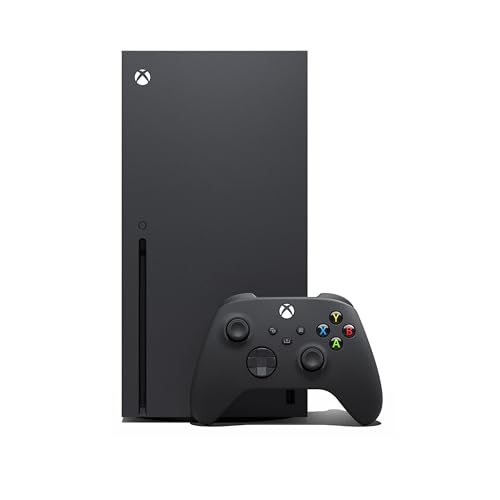
- FASTEST, MOST POWERFUL XBOX — Experience next-generation performance with 12 teraflops of processing power, delivering s…
- TRUE 4K GAMING UP TO 120 FPS — Enjoy breathtaking visuals with true 4K resolution, HDR, and frame rates up to 120 FPS, p…
- 1TB CUSTOM SSD AND XBOX VELOCITY ARCHITECTURE — Reduce load times dramatically with the custom 1TB NVMe SSD and XBOX Vel…
Online Services and Multiplayer Capabilities
The online gaming experience is a critical aspect of the current console generation, with both PlayStation and Xbox offering robust online services that cater to a wide variety of gaming needs. At the forefront of these services are the PlayStation Network (PSN) and Xbox Live, both of which have established themselves as solid platforms for multiplayer gaming.
PlayStation Network offers several subscription models, the most notable being PlayStation Plus. This service not only facilitates online multiplayer but also includes access to free monthly games and exclusive discounts on titles. As of October 2023, the PS Plus subscription can be segmented into three tiers: Essential, Extra, and Premium, each adding more value through unique game catalogs and cloud gaming functionalities. The cloud gaming feature, known as PlayStation Now, allows users to stream games directly, enhancing accessibility for gamers.
On the other hand, Xbox Live is part of Microsoft’s offerings and is heavily integrated into the ecosystem of Xbox consoles. Xbox Live Gold presents a subscription service that provides similar benefits, including online multiplayer functionality, free monthly games, and exclusive discounts. Furthermore, Xbox Game Pass Ultimate combines Xbox Live Gold with access to a vast library of games, which include a cloud gaming option known as Xbox Cloud Gaming. This feature enables players to enjoy a wide range of titles on various devices beyond just consoles, enhancing flexibility for gamers.
Cross-platform play is another significant benefit that both platforms are beginning to embrace. While traditionally, online multiplayer has been constrained to respective console users, partnerships have allowed PlayStation and Xbox players to compete with one another in select games. This evolving landscape of online services and multiplayer capabilities is pivotal for gamers deciding between PlayStation and Xbox in today’s interactive entertainment market.
Accessories and Gaming Ecosystem
The gaming experience on both PlayStation and Xbox extends well beyond the consoles themselves, largely due to the variety of accessories and peripherals available for each platform. For PlayStation users, the DualSense controller offers advanced haptic feedback and adaptive triggers, creating a more immersive gameplay experience. Its ergonomic design and customizable features enhance user satisfaction, ensuring comfort during lengthy gaming sessions. Additionally, the PlayStation VR headset allows gamers to explore virtual environments with a level of engagement that traditional gameplay cannot match.
On the other hand, Xbox players can take advantage of the Xbox Elite Wireless Controller, which features adjustable tension thumb sticks and interchangeable components, providing a tailored gaming experience. Furthermore, the Xbox Series X offers seamless integration with the Xbox Adaptive Controller, catering specifically to gamers with disabilities. This commitment to accessibility is an essential aspect of the Xbox ecosystem, reflecting its broad appeal to a diverse audience.
Another noteworthy aspect of both ecosystems is their respective subscription services, which include PlayStation Plus and Xbox Game Pass. Both services offer extensive libraries of games, cloud saves, and online multiplayer functionalities, fostering community engagement. Notably, Xbox Game Pass provides access to a growing selection of titles on release day, appealing to gamers who prioritize value. Meanwhile, PlayStation’s innovative PlayStation Now service allows users to stream a wide range of games directly to their consoles, enhancing the overall gaming library available to PlayStation users.
In summary, while both PlayStation and Xbox offer unique accessories that contribute to their respective gaming ecosystems, the choice of which is better may depend on individual preferences, gaming styles, and the extent to which one values innovation versus a more traditional experience in gaming accessories and services.

- Sold as 1 Each.
- Xbox Elite Wireless Controller Series 2 for Xbox One, Xbox Series S, Xbox Series X and PC. Tailor the controller to your…
- Swap thumbstick toppers, D-pads, and paddles to tailor your controller to your preferred gaming style. Use Xbox Wireless…

- Feel physically responsive feedback to your in-game actions through haptic feedback
- Experience varying levels of force and tension at your fingertips with adaptive triggers
- Chat online through the built-in microphone and connect a headset directly through the 3.5mm jack

Community and Social Features
The advent of gaming has been significantly shaped by the integration of social features within consoles, providing a platform where players can connect and engage with one another. Both PlayStation and Xbox have made substantial investments in this area, fostering a vibrant community atmosphere in their ecosystems. These social tools enhance the gaming experience, allowing players to share experiences, communicate effectively, and interact on multiple levels.
On the PlayStation platform, players are equipped with tools such as the Party system, which facilitates voice and text communication among friends. This feature allows gamers to strategize and collaborate on gameplay, thus enhancing teamwork. PlayStation also offers Share Play, enabling players to invite friends to join their game sessions, even if they do not own the specific title. This function not only promotes player engagement but also encourages a sense of community as players can share their experiences in real-time.
Similarly, Xbox has developed its social framework with features like Xbox Live, which provides robust communication options through voice chat and text messaging. The Xbox app further enhances this experience by allowing users to connect and share their gameplay directly from their mobile devices. With integrated social media sharing, players can showcase achievements and memorable moments effortlessly. Moreover, the new Clubs and Looking for Group (LFG) features help create communities around shared gaming interests, enabling players to find others with similar gaming preferences.
Both platforms emphasize community engagement, but they each offer unique features that cater to different player needs. Ultimately, the effectiveness of these social tools can enhance the overall gaming experience, making it not just about gameplay but also about building lasting connections within the gaming community.
Pricing and Value Proposition
When evaluating the ultimate gaming experience, pricing and value proposition play a critical role in the decision-making process for both PlayStation and Xbox. Each console offers various pricing structures, which reflect their respective target markets and features.
The initial price of each console varies; for instance, the latest PlayStation model is typically priced competitively with its Xbox counterpart. This initial investment is just one aspect to consider. Besides the upfront cost, it is essential to evaluate ongoing expenses such as subscription fees and game purchases. Sony’s PlayStation offers a subscription service known as PlayStation Plus, while Microsoft provides Xbox Game Pass. Both services deliver access to a library of games, online multiplayer capabilities, and exclusive discounts. However, the pricing for these services differs and can significantly impact the overall cost.
In addition to subscription fees, the cost of games also contributes significantly to the consoles’ value propositions. Both PlayStation and Xbox generally offer new titles at similar price points upon release. Yet, various promotions, sales, and seasonal discounts can influence the final price of games. Furthermore, each platform has its ecosystem for digital purchases, with Xbox offering Xbox Live Marketplace and PlayStation providing the PlayStation Store. Evaluating these ecosystems may provide insights into which console delivers better value over time.
Ultimately, assessing the overall cost of ownership for both consoles—factoring in the price of the hardware, subscriptions, and games—is key for potential buyers. By analyzing their gaming habits and budget, gamers can make a more informed choice regarding which console offers the best overall value for their investment.
Conclusion: Which Consoles Reigns Supreme?
In the ongoing debate between PlayStation and Xbox consoles, determining which system is superior rests heavily on individual gaming preferences and lifestyle. Throughout this analysis, we have delved into various aspects such as exclusive game titles, online services, hardware specifications, and user interfaces, each playing a pivotal role in shaping a gamers experience.
PlayStation has been lauded for its vast library of exclusive titles that cater to a wide audience, including critically acclaimed franchises such as “The Last of Us” and “God of War.” Its user-friendly interface and immersive virtual reality capabilities add to its appeal. On the other hand, Xbox has made significant strides with its cloud gaming service and backward compatibility, allowing players to enjoy a comprehensive catalog of games from previous generations. Furthermore, Xbox Game Pass provides gamers with access to a diverse range of games at an affordable subscription price, making it a favorable option for budget-conscious players.
From a hardware standpoint, both consoles exhibit unique strengths and weaknesses. PlayStation’s focus on powerful internals delivers stunning graphics, whereas Xbox emphasizes the value of an integrated ecosystem that seamlessly connects gaming with multimedia functionalities. Additionally, Xbox Live Gold and PlayStation Plus both offer engaging online experiences, albeit with different incentives and promotional features.
Ultimately, the choice between PlayStation and Xbox hinges on personal priorities. Gamers prioritizing exclusive content and cutting-edge technology may lean towards PlayStation, whereas those who value online gaming and broader access might favor Xbox. Each console embodies distinct characteristics tailored to diverse gaming communities, asserting that there truly is no definitive answer to which gaming console reigns supreme.
PlayStation 5 Pro Is The Latest Version Console

- PlayStation Spectral Super Resolution (PSSR) Get super sharp image clarity on your 4K TV using AI enhanced resolution fo…
- Optimized Console Performance Reach higher and more consistent frame rates for silky smooth gameplay with support for 60…
- Advanced Ray Tracing Experience next level realism with ray traced reflections, shadows, and high-quality global illumin…
❓ Frequently Asked Questions
Q: What are the main strengths of PlayStation compared to Xbox?
A: PlayStation is renowned for its strong library of exclusive titles, such as The Last of Us and God of War, along with a streamlined user experience and immersive storytelling. Its hardware emphasizes high-quality graphics and a user-friendly interface, complemented by innovations like virtual reality through PlayStation VR.
Q: How do hardware specifications differ between PS5 and Xbox Series X?
A: Both consoles use a similar AMD Zen 2 architecture, but the PS5 features a 3.5 GHz eight‑core CPU and a Ray Tracing capable RDNA 2 GPU, while the Xbox Series X runs at 3.8 GHz with a high‑end RDNA 2 GPU. Both include fast SSDs, yet the Series X emphasizes higher raw performance in frame rates and resolution, whereas the PS5 prioritizes swift loading and a balance of power with its exclusive titles.
Q: What role do exclusive games play in choosing a console?
A: Exclusive games significantly influence console preference; players attracted to single‑player narratives may favor PlayStation for its storied franchises like God of War and The Last of Us, while those who value multiplayer and community experiences may lean toward Xbox because of its ecosystem and services such as Game Pass and Xbox Live.
Q: How do user interfaces and accessibility differ between PlayStation and Xbox?
A: PlayStation offers a clean, minimalist UI with a focus on speed and a streamlined Control Center, while Xbox provides a dynamic, highly customizable dashboard with extensive features and accessibility options. Both platforms include tools to adjust display settings and remap controls, ensuring an inclusive experience.
Q: What online services and multiplayer options do PSN and Xbox Live offer, and how do Game Pass and PlayStation Plus compare?
A: PlayStation Network offers PlayStation Plus with online multiplayer access, monthly free games, and exclusive discounts, plus cloud gaming via PlayStation Now. Xbox Live provides Xbox Live Gold and Xbox Game Pass, the latter combining online multiplayer with a large and rotating game library and cloud gaming. Cross‑platform play is expanding, enabling some titles to be played across PlayStation and Xbox.